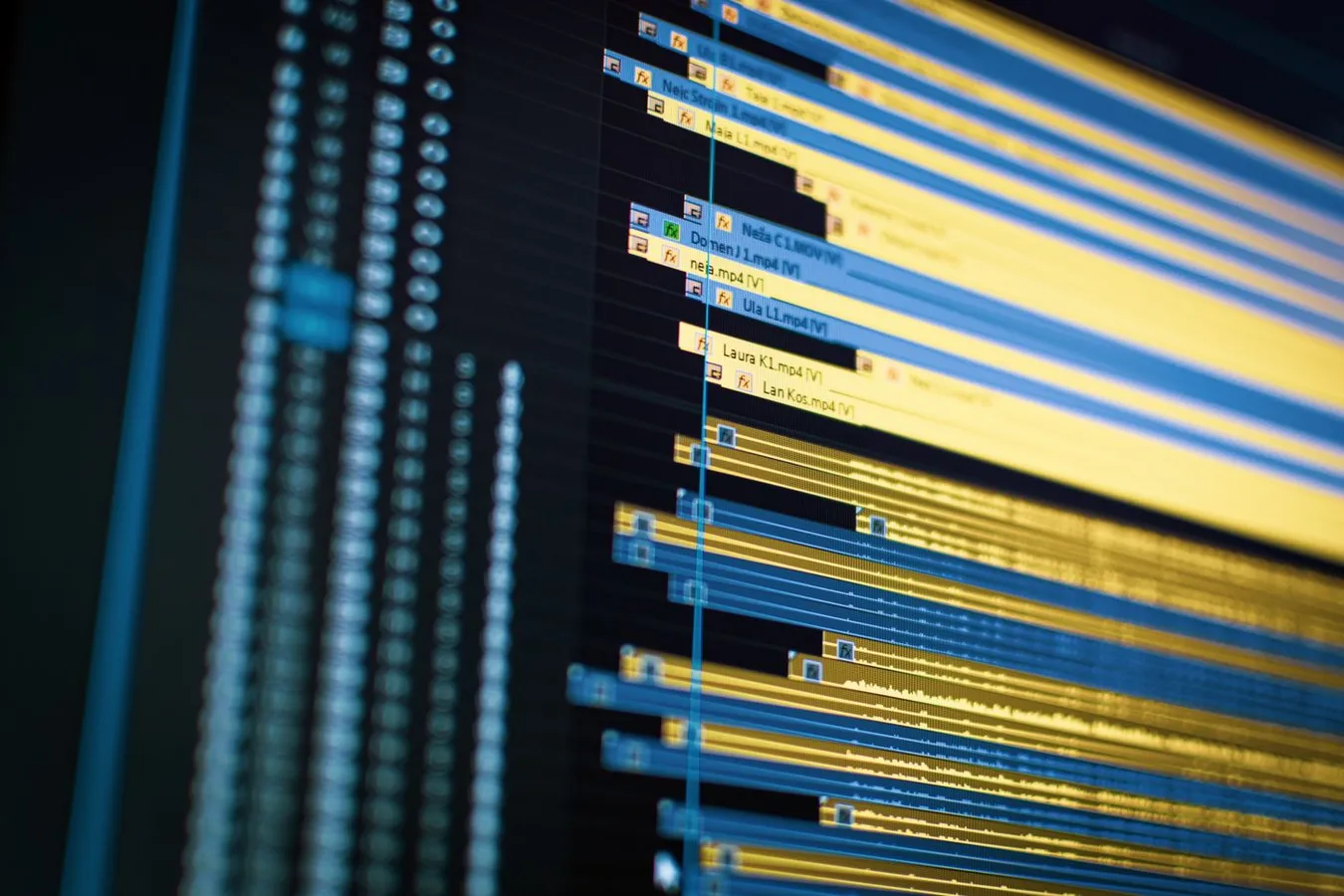
The camera stayed on a woman while another person told a story. She blinked, followed the conversation with her eyes and turned slightly toward the window. A later take has a better delivery of the speech but very few useful pictures of the listener. The editor wants to borrow the turn toward the window from the first take. The gesture has a readable direction. Its cause is about to change.
Lay the listening shot over the speech in a working sequence and begin the comparison before the gesture. If the woman already looks troubled in the scene, the face can carry that state across a cut. If the speaker says something entirely new at the borrowed glance, picture and sound can combine into a specific new assertion about her response. The same piece of footage supports both uses. The editor needs enough time before and after it to see which use the audience receives.
Follow what her eyes can know
Compare a position during the speaker's explanation with one just after the speaker mentions a particular person. In the first, her glance can describe the room or the general difficulty of listening. In the second, it may identify that person as the problem. If the later part of the film depends on the listener learning another fact first, the second placement can put that discovery too early. The problem is easy to miss while watching for continuity of head height.
Look at the instant she looks back. Returning to the speaker on an answer can make her seem to wait for it. Returning on a pause can give her the appearance of having made a decision. A small offset can create a different reading even though the inserted picture and its length remain unchanged. Keep a short label for each alternative using the implication it has, such as checking the room or hearing a name.
Separate continuity from cause
A mark on a sleeve may jump between the two takes. That inconsistency has to be assessed, but it is an independent question from whether the reaction fits. Find out which problem viewers notice by watching two versions. Give one the strong implication in the least distracting visual context available. Give the other clean physical continuity with a less pointed reaction. When reviewers discuss the character's motivation in the first, they have noticed a story problem. When they point to clothing in the second, the continuity needs its own work.
Check interruptions to visible activity. If the listener was wrapping a parcel, the borrowed turn can leave her hands suddenly empty in the next shot. A short excerpt above the hands may avoid that problem. It still changes what the eyes seem to do. Begin playback early enough for the parcel task to be recognizable, then continue until the next use of the parcel. This gives the action and the reaction a chance to coexist.
Preserve a neutral alternative
Make one version that stays on the speaker through the ambiguous phrase. Let the audience hear it before showing the listener. The neutral comparison may leave a different character in control of the scene. It can also provide a benchmark for what people understand without a visual cue. If both versions yield the same interpretation, choose the one that keeps a useful rhythm or makes someone easier to hear. If their interpretations split, you know the borrowed picture is doing narrative work.
An edit near the end of the sequence can make a glance look back on everything the conversation contained. The same glance early can announce that a thought is still forming. Let a fresh viewer tell you what moment the face belongs to. The useful detail is the connection they make. Once you can place the reaction within that connection, the reused picture can support the scene while keeping each character's knowledge in the right order.
A reaction can also remain deliberately unreadable. Keep its first instant and lose the turn if the scene needs us to know the person is listening while leaving open what thought they had. A short selection can preserve a more useful ambiguity than the full gesture.